Introduction: Tool Cabinet Construction Comparison
The construction method directly determines the service life, stability and overall value of garage storage equipment. When purchasing workshop storage, many users struggle to choose between riveted tool cabinet and welded garage cabinet structures. As core manufacturing techniques for heavy duty tool chest construction, welding and riveting deliver vastly different performance in durability, anti-rust ability, daily maintenance and long-term costs. A professional comparison helps buyers select the most cost-effective garage and workshop storage solution.
What Are Welded & Riveted Tool Cabinet Structures?
Welding and riveting are two mainstream assembly processes for metal tool cabinets. Welded cabinets integrate panels through high-temperature fusion, while modern riveted tool chests adopt weld-free tenon and rivet splicing technology. Each construction process has unique strengths and weaknesses, especially for high-frequency use in home garages and professional trade workshops.
1. Welded Garage Cabinet Traditional Construction
A welded garage cabinet relies on full welding to connect steel panels and frames. This traditional process fuses metal parts into a whole through high-temperature operation. Although it achieves basic structural fixation, high-temperature welding easily causes metal thermal deformation, welding gaps and surface solder joints. These inherent flaws leave hidden troubles for rusting, structural loosening and short service life in humid garage environments.
2. Riveted Tool Cabinet Modern Weld-Free Construction
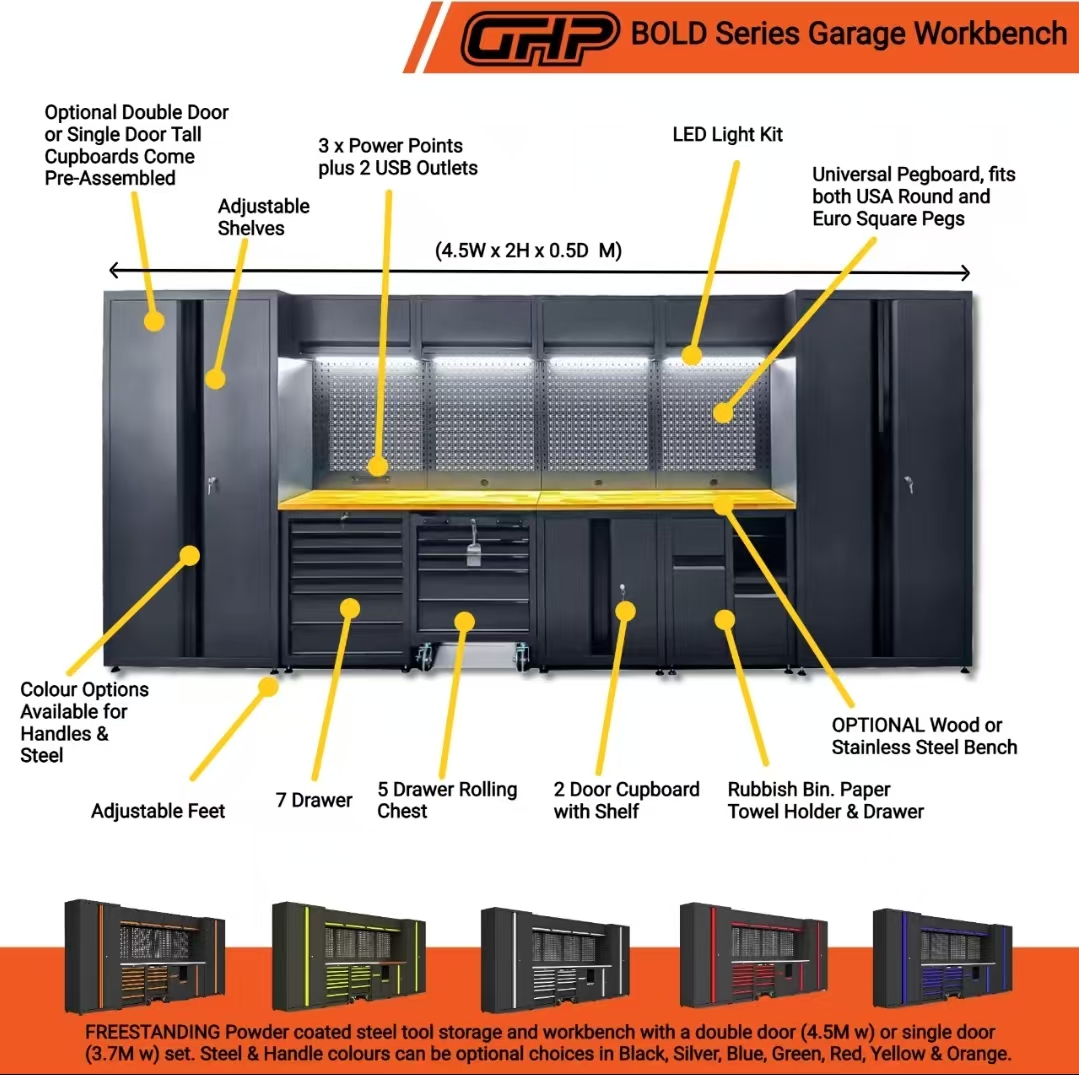
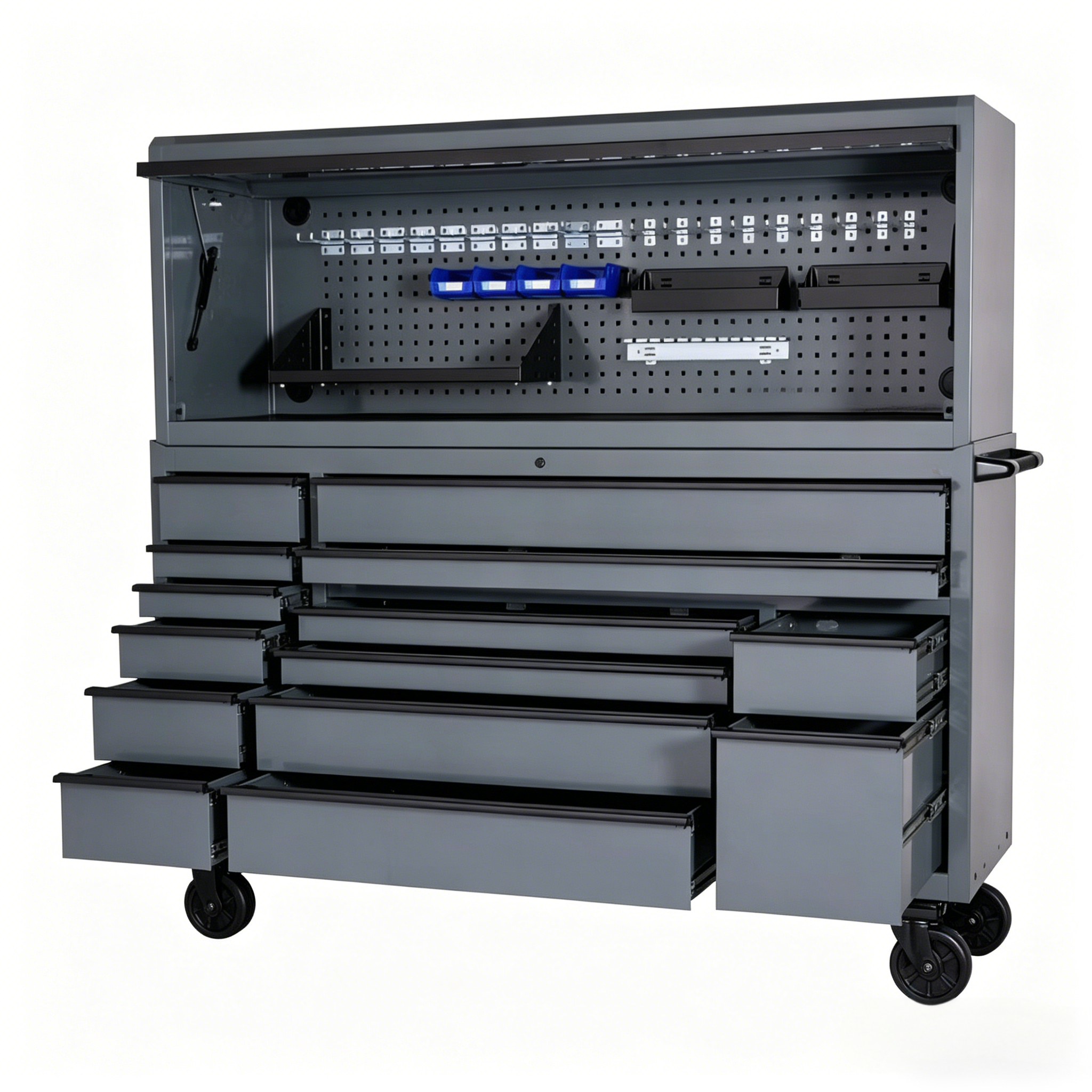
The upgraded riveted tool cabinet adopts advanced weld-free metal tenon and rivet structure, abandoning traditional high-temperature welding. All steel panels are precisely spliced through integrated tenon locking and reinforced rivet fixing. Combined with premium 180g galvanized steel sheets and powder spraying treatment, this heavy duty tool chest construction eliminates welding defects, achieving tighter, smoother and more stable overall structural performance.
Core Comparison: Welded vs Riveted Tool Cabinets
1. Structural Durability & Stability
The riveted tool cabinet outperforms welded structures significantly in long-term stability. Welded joints are prone to virtual welding, crack expansion and aging vibration after years of frequent drawer pulling and tool loading. In contrast, the tenon and rivet splicing structure locks every panel tightly without welding stress. It maintains uniform force distribution, effectively avoiding deformation, loosening and cracking, perfectly adapting to long-term heavy-load workshop use.
2. Anti-Rust Performance & Surface Quality
The solder joints and welding gaps of a welded garage cabinet are the weakest anti-rust parts. Welding destroys the original galvanized layer, making these areas prone to oxidation, rust and peeling in humid or coastal climates. The weld-free riveted tool cabinet retains the complete 180g galvanized steel protective layer and intact spray coating. No damaged metal exposed points ensure excellent and lasting anti-corrosion performance.
3. Long-Term Usage Cost & Maintenance
In terms of heavy duty tool chest construction cost performance, riveted structures have lower comprehensive costs. Welded cabinets require regular rust repair and welding reinforcement due to joint aging, bringing continuous maintenance expenses. The rivet-tenon integrated structure needs no secondary maintenance. Its durable construction reduces replacement frequency, greatly cutting long-term operational and repair costs for garages and workshops.
4. Load-Bearing & Safety Performance
Welded cabinets have uneven stress at welding seams, which may break under sudden heavy impact. Optimized riveted structures feature overall balanced rigidity and stronger impact resistance. Compliant with industrial safety standards, the stable structure prevents cabinet tilting and panel falling, providing safer storage for heavy power tools and mechanical equipment.
Final Verdict: Which Construction Is Better?
For long-term garage and professional workshop use, the modern riveted tool cabinet is far more practical than traditionalwelded garage cabinet. The weld-free tenon and rivet heavy duty tool chest construction solves the pain points of welding cracking, easy rust and frequent maintenance. With better durability, superior anti-corrosion performance and lower long-term costs, it has become the mainstream upgraded choice for modern heavy-duty tool storage.